
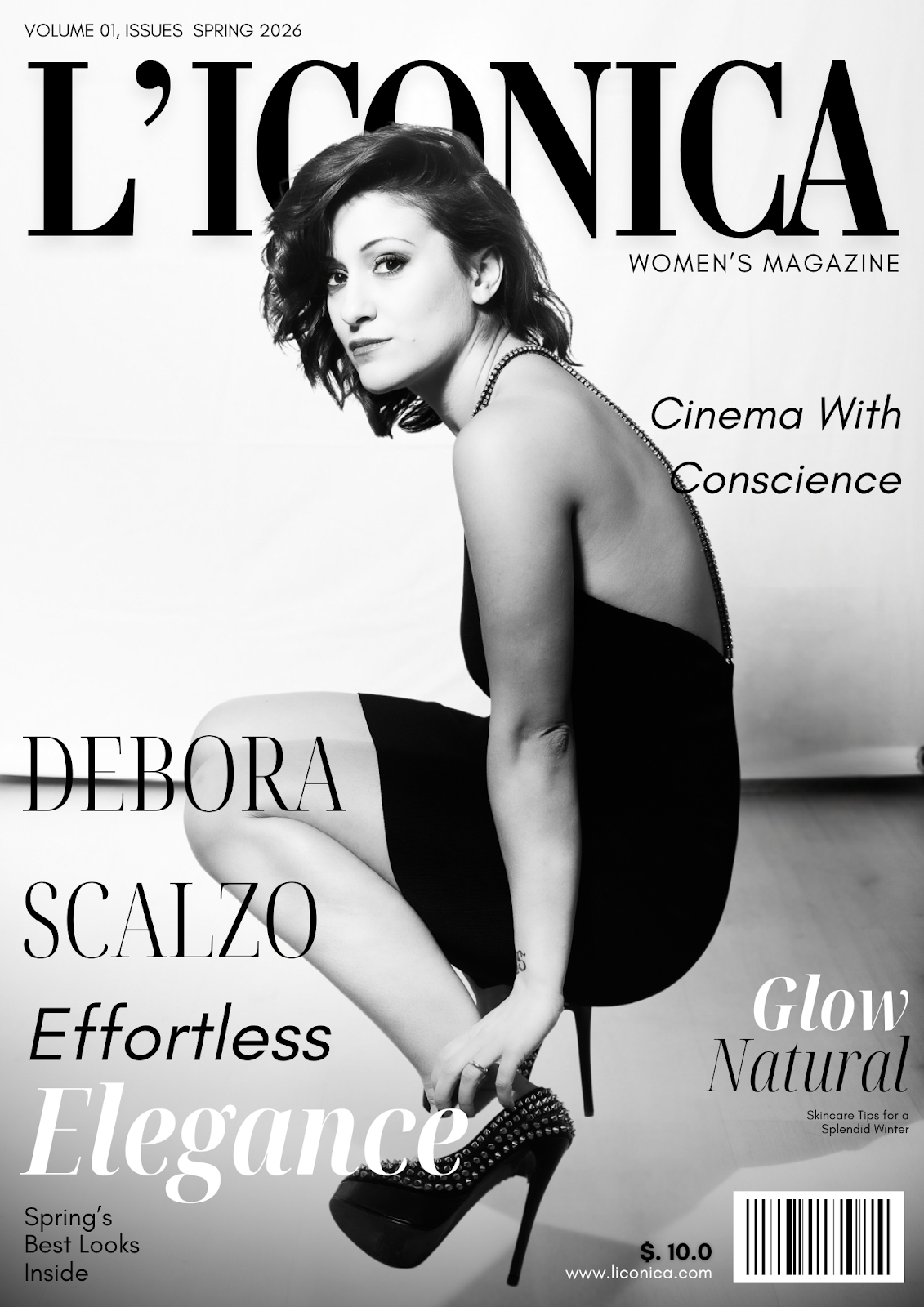
A Leap of Faith: From Banking to Cinema
Fifteen years ago, Debora Scalzo made a decision that would redefine her entire life. At the time, she was working in banking—a stable, structured profession that offered security and predictability. Yet inside her lived a creative force that refused to be silenced. Cinema, writing, and storytelling had always been her true calling. Leaving a secure job was not simply a professional shift; it was a leap of faith rooted in conviction.
That courage became the foundation of her career. What began as a personal risk evolved into a powerful creative journey that positioned her as a director, writer, songwriter, and educator working on projects with profound social relevance.
Inspired by Epic Storytelling
Scalzo’s passion for cinema was born in childhood. Her grandfather Salvatore introduced her to timeless classics like Ben-Hur, Cleopatra, and The Ten Commandments. Those long, emotionally charged historical epics shaped her imagination.
Watching those films was not just entertainment; it was education. Through them, she absorbed the power of narrative—how stories could move audiences, illuminate moral dilemmas, and immortalize real human struggles. These early experiences planted the seed of a dream: to tell stories that matter, stories that endure.
The Breakthrough: Giving Voice to the Fallen

Her first major milestone came with her debut novel, Io Resto Così (Kimerik). The book was dedicated to police officers who lost their lives in service. It was not a commercial gamble—it was a mission. Scalzo sought to give dignity, humanity, and remembrance to those who often remain statistics in headlines.
This work marked her creative identity. From the beginning, she demonstrated that her storytelling would not shy away from difficult truths. Instead, it would confront them with empathy and integrity.
Beyond literature, she also became a songwriter for prominent artists within the Italian music scene, blending narrative sensitivity with lyrical expression. Music became another medium through which she could explore human complexity.
Bridging Art and Reality

At the heart of Scalzo’s career lies a clear purpose: bridging the gap between untold stories and the audience that deserves to hear them.
She is drawn to real events—particularly those overshadowed by time, bureaucracy, or silence. Her projects frequently revolve around organized crime, corruption, abuse of power, and historical injustice. Yet her approach is not sensationalist. She prioritizes authenticity, research, and ethical responsibility.
Two of her upcoming films are dedicated to Italian law enforcement. One is loosely inspired by real events and addresses themes of organized crime and social injustice. Though creatively interpreted, it remains anchored in documented realities. The second is a historical drama based on a true story from World War II—a genre that fulfills a lifelong dream inspired by the epic films of her childhood.
Ethics Before Entertainment
Scalzo is unwavering about her professional principles. She does not create comedies or light entertainment projects. Instead, she chooses biographical, historical, and dramatic films—stories rooted in real events or inspired by actual occurrences.
For her, cinema is not merely spectacle. It is responsibility. Every project must carry meaning, reflection, and potential impact. She evaluates proposals not by commercial appeal but by ethical alignment. If a story does not resonate with her values or lacks depth, she simply does not pursue it.
This discipline defines her uniqueness. She describes herself as “different and uncomfortable,” unafraid to tell the stories many would rather avoid. In a creative industry often driven by trends, Scalzo’s refusal to compromise on substance sets her apart.
A Film That Became Education

Among her proudest achievements is Paolo Vive, dedicated to Judge Paolo Borsellino. The project transcended traditional cinematic boundaries by becoming part of school curricula in Italy and abroad.
For Scalzo, this was the purest definition of success. Not awards. Not red carpets. But the knowledge that her work contributes to education and historical awareness.
When a film enters classrooms, it becomes part of collective memory. It shapes how younger generations understand justice, sacrifice, and civic responsibility. That lasting impact is what fuels her creative drive.
Defining Success

Scalzo measures success differently from many in the entertainment world. For her, success is not quantified by trophies or applause. It is measured by legacy.
Success means creating projects that educate, move, and inspire reflection. It means telling stories that remain in people’s hearts long after the credits roll. Above all, it means building a body of work that her son can one day look at with pride.
This deeply personal dimension adds emotional weight to her professional ambitions. Every script, every production, every collaboration carries the silent question: Will this endure?
The Road Ahead
Scalzo’s current slate of projects reflects both ambition and vision.
In addition to her two films dedicated to Italian law enforcement, she is developing an international television series centered on organized crime, set to be filmed in Sicily. The series promises to combine investigative depth with cinematic intensity.
Her ninth novel is also set for release. Unlike her previous books dedicated to law enforcement, this new work ventures into dramatic investigative territory, featuring a foreword written by a prominent Italian anti-mafia magistrate. It marks a new creative chapter while maintaining her commitment to socially relevant themes.
Simultaneously, she is overseeing film distribution projects in Italy and managing casting for two confidential productions.
Another milestone is the launch of the Milano Crime International Film Festival, an initiative she proudly founded. The festival represents more than an event; it is a platform for films that explore crime, justice, and investigative storytelling with depth and integrity.
A Legacy in the Making
Debora Scalzo’s journey is not one of accidental success. It is the result of risk, discipline, and unwavering conviction. Leaving banking fifteen years ago required courage. Sustaining a career built on challenging, socially conscious narratives requires resilience.
Her work exists at the intersection of cinema, literature, and music. It bridges art and reality, storytelling and social engagement. She gives voice to the fallen, the overlooked, and the historically silenced.
In an industry often drawn to superficial trends, Scalzo remains committed to substance. She tells stories that are complex, dramatic, and ethically grounded. Stories that demand attention. Stories that educate. Stories that endure.
Ultimately, her mission is clear: to leave behind films and books that carry meaning long after their release. To contribute to cultural memory. And to create a body of work that reflects integrity, courage, and heart.
For Debora Scalzo, storytelling is not simply a profession—it is a responsibility. And she carries it with unwavering determination.